New Versus Used Furniture
The official FurnitureKaro Editorial Team is dedicated to providing accurate, factual, and practical guides on buying, selling, and managing furniture in Pakistan.
Deciding between new showroom furniture and pre-owned secondary market items requires evaluating your housing status, financial capital, timeline constraints, and material expectations. While new furniture provides store warranties and custom dimension ordering, pre-owned items offer immediate availability and access to solid Sheesham (Indian Rosewood) or Teak timber. To make an informed decision, buyers must analyze the total acquisition cost rather than comparing initial sticker prices alone.
1. Who Should Buy New Furniture?
Purchasing brand-new showroom furniture is most practical when specific aesthetic, warranty, or customization criteria take priority over upfront cost:
- Permanent Homeowners: Buyers establishing long-term residences who want custom dimensions, tailored fabric textures, and specific wood stain finishes.
- Flexible Lead Times: Buyers who can accommodate 2 to 6 week workshop production lead times for custom orders.
- Commercial & Warranty Requirements: Businesses or buyers who require formal tax invoices, corporate receipts, and 1 to 5 year structural warranties against manufacturing defects.
2. Who Should Consider Used Furniture?
Pre-owned furniture offers clear practical advantages for buyers operating under logistical or immediate timeframe requirements:
- Renters & Temporary Residents: Students, young professionals, or families living in rented apartments in urban centers like Karachi, Lahore, and Islamabad who move frequently.
- Immediate Same-Day Placement: Buyers who need a bed set, sofa, or office desk immediately without waiting for workshop production schedules.
- Hardwood Material Seekers: Buyers who prioritize solid Sheesham or Teak hardwoods over synthetic particleboards, acquiring seasoned timber at accessible capital levels.
3. Total Acquisition Cost Model: Beyond the Sticker Price
A common buying mistake is comparing showroom retail prices directly against secondary asking prices without accounting for hidden secondary friction costs. The total cost of acquisition is calculated as follows:
Total Acquisition Cost (TAC) Formula:
TAC = P_initial + C_transport + C_repair + C_refinish
- P_initial = Initial asking or negotiated purchase price in PKR.
- C_transport = Intra-city loader vehicle fare (Suzuki Bolan or Hyundai Shehzoor) plus floor-carry labor.
- C_repair = Hardware replacement costs (drawer slides, hinges, screw tightening).
- C_refinish = Optional polishing, sanding, or fabric deep-cleaning expenses.
4. Illustrative Worked Cost Comparisons
To evaluate long-term value, consider these two illustrative total acquisition cost scenarios (based on standard market transport and refinishing parameters):
Scenario A: Low-Cost New Engineered Board (MDF) Bed Set
- Initial Showroom Price (P_initial): Rs 65,000
- Showroom Delivery (C_transport): Included
- Initial Repairs & Refinishing: Rs 0
- Total Acquisition Cost: Rs 65,000
- Expected Useful Service Life: 3 years (sensitive to moisture swell and screw stripping during moves)
- Effective Annualized Cost: Rs 65,000 / 3 = Rs 21,666 / year
- Estimated Resale Value at Year 3: Rs 10,000 (15% retention for commercial MDF)
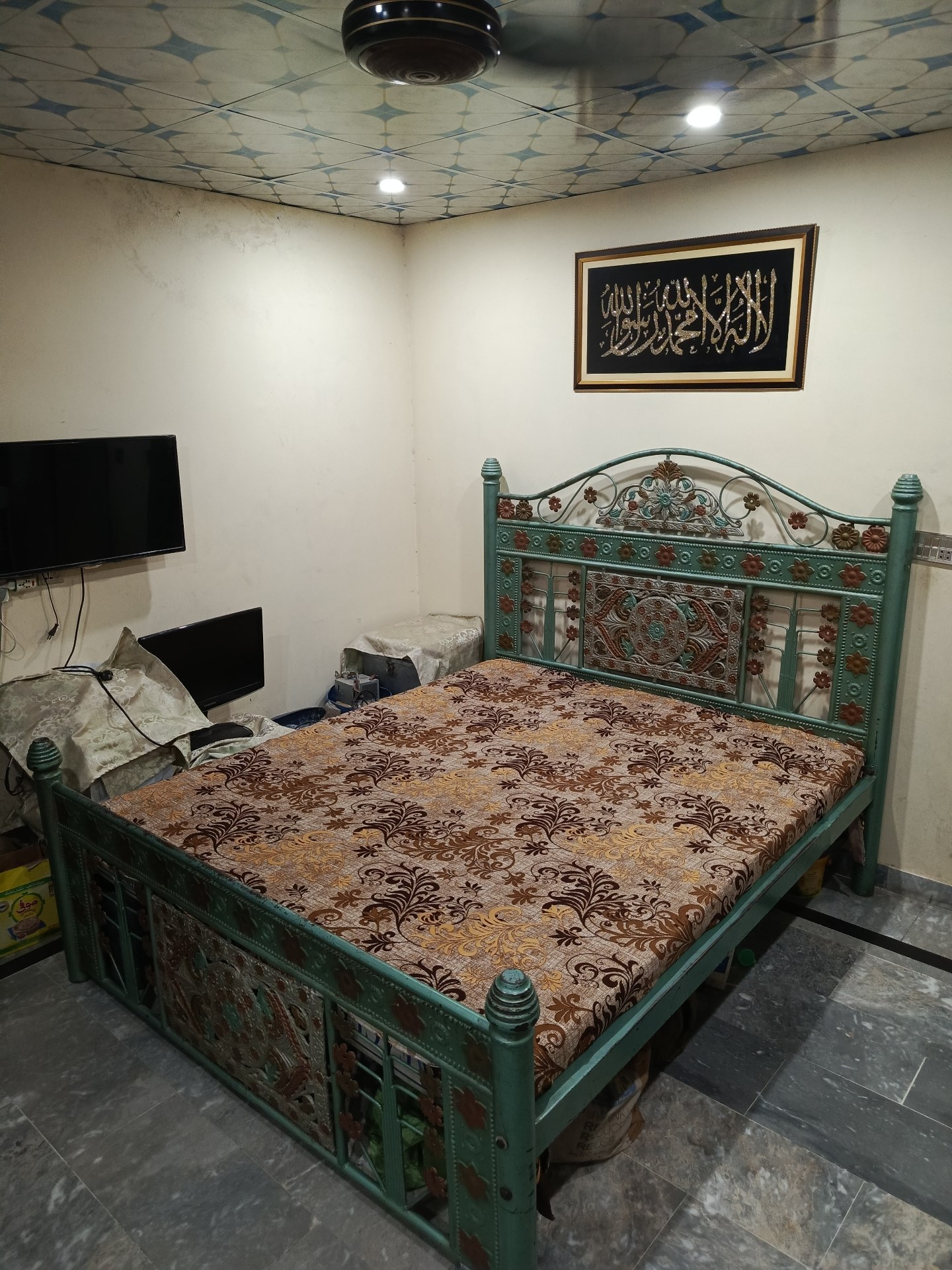
Scenario B: Pre-Owned Solid Sheesham Hardwood Bed Set
- Negotiated Asking Price (P_initial): Rs 45,000
- Suzuki/Shehzoor Loader Transport + Labor (C_transport): Rs 4,500
- Minor Carpenter Tightening & Re-Polishing (C_refinish): Rs 3,500
- Total Acquisition Cost: Rs 53,000
- Expected Useful Service Life: 10+ years (solid seasoned hardwood)
- Effective Annualized Cost: Rs 53,000 / 10 = Rs 5,300 / year
- Estimated Resale Value at Year 10: Rs 25,000 (retains solid timber scrap/market value)
5. Material Physics and Longevity Comparison
Material composition dictates structural lifespan and repairability:
| Evaluation Metric | New Showroom (Entry / Mid-Tier) | Used Pre-Owned (Hardwood Class) |
|---|---|---|
| Primary Substrate | Engineered HDF/MDF or laminated particleboard | Solid Sheesham (Dalbergia sissoo) or Teak |
| Moisture Vulnerability | High (edges swell permanently upon liquid contact) | Low (handles seasonal humidity; polish protects grain) |
| Joinery Endurance | Screws strip compressed board threads after 1–2 moves | Mortise-and-tenon joints can be disassembled repeatedly |
| Surface Repairability | Laminate chips cannot be sanded or re-stained | Surface scratches can be filled, sanded, and re-polished |
| Delivery Lead Time | 2 to 6 weeks for custom orders | Immediate handover upon inspection |
6. When Used Furniture Delivers Superior Value
- Solid Hardwood Availability: Seasoned Sheesham timber is increasingly expensive in new showrooms. The pre-owned market provides access to heavy hardwood frames at lower capital outlay.
- Environmental Sustainability: Extending the lifespan of existing wooden furniture reduces municipal landfill waste and reduces deforestation pressure.
- Depreciation Protection: New furniture experiences its steepest valuation drop within the first 12 months. Pre-owned items purchased at market secondary levels maintain stable resale floors.
7. When New Furniture is the More Practical Choice
- Custom Room Dimensions: When fitted wardrobes or wall-to-wall study desks require precise millimeter adjustments.
- Hygiene-Sensitive Soft Goods: Buyers who prefer brand-new un-upholstered mattresses or custom fabric sofas directly from verified manufacturers.
- Corporate Accounting: Commercial offices requiring registered tax invoices and vendor GST compliance.
8. FurnitureKaro Buyer Decision Framework
- [ ] Step 1: Calculate Total Acquisition Cost (Asking Price + Loader Fare + Minor Repairs)
- [ ] Step 2: Verify Material Substrate (Distinguish solid hardwood from laminated particleboard)
- [ ] Step 3: Assess Housing Horizon (Choose lightweight MDF for temporary rentals; solid wood for permanent homes)
- [ ] Step 4: Perform Physical Handover Inspection (Verify joint stability in person before settling payment)